
"one seat"
2000 article(s) found

Playing coffee with a mocha pot-traditional mocha pot (illustration)
The lower seat of the traditional mocha pot 1. Pour hot water into the lower seat and do not exceed the height of the relief valve. two。 Grind coffee powder (Pegasus 1.5 is recommended). Pour coffee powder into a powder cup, but more. Smooth the excess powder with your hands or chopsticks or bean spoons. 3. Stick the filter paper on the upper seat filter, touch the filter paper with a little water to help the filter paper, and screw on the upper seat. 4. Screw on the upper seat (tighten the pressure so that it won't leak).
In the cafe, the little secrets that have nothing to do with coffee
Investigation of those small Secret journalists in the Retail Circle (37) Business Daily reporter Chen Yili intern Chen Anne not long ago, a coffee shop on Wulin Road that charged air purification fees became popular. You drink coffee in its house. You have to pay for the air you breathe. Although people have different views on this, we have to admit that the owner of this cafe spends money on hardware.

General knowledge of fine coffee brewing coffee in a siphon pot at home
Generally speaking. Siphon coffee will heat the siphon pot in two ways, one is gas, and the other is sprinkling essence. Because of its high firepower and relatively high heating, gas is used by more cafes. In fact, there is a big difference between the two heating methods. Step 1: select the appropriate thickness of ground beans. For siphon coffee, it is recommended that the thickness of ground beans is close to that of special grains and fine sand. So just buy one.

How to use mocha pot to make boutique coffee?
The mocha pot is divided into three parts: the upper seat, the powder trough, and the lower seat. The lower seat is a sink for holding water, and the powder trough is used to hold finely ground coffee powder. The upper seat is to hold the extracted coffee liquid. When brewing, the water is placed in the lower pot and the coffee is placed in the middle of the net. when the pot is heated, it produces steam and rushes the hot water up. Pass through the coffee powder, then into the pot to form coffee. Because

Analysis of homemade coffee: mocha pot
The mocha pot is divided into three parts: the upper seat, the powder trough, and the lower seat. The lower seat is a sink for holding water, and the powder trough is used to hold finely ground coffee powder. The upper seat is to hold the extracted coffee liquid. When brewing, the water is placed in the lower pot and the coffee is placed in the middle of the net. when the pot is heated, it produces steam and rushes the hot water up. Pass through the coffee powder, then into the pot to form coffee. Because

Play with traditional mocha pots with mocha pots
The lower seat of the traditional mocha pot 1. Pour hot water into the lower seat and do not exceed the height of the relief valve. two。 Grind coffee powder (Pegasus 1.5 is recommended). Pour coffee powder into a powder cup, but more. Smooth the excess powder with your hands or chopsticks or bean spoons. 3. Stick the filter paper on the upper seat filter, touch the filter paper with a little water to help the filter paper, and screw on the upper seat. 4. Screw on the upper seat (tighten the pressure so that it won't leak).
A complete knowledge of siphon pot
The working principle of the siphon pot How does it work: the main principle of Syphon is to use the ideal gas equation: PV=nRT, under a fixed volume, heat the boiling water to make the steam pressure of the boiling water, press the boiling water into the upper layer to brew the coffee through the glass tube, and then cool the lower layer in a similar vacuum state to absorb the brewed coffee from the upper layer, and filter the dregs with a filter in the middle. You can take it while looking at it.

Self-made coffee analysis mocha pot
The mocha pot is divided into three parts: the upper seat, the powder trough, and the lower seat. The lower seat is a sink for holding water, and the powder trough is used to hold finely ground coffee powder. The upper seat is to hold the extracted coffee liquid. When brewing, the water is placed in the lower pot and the coffee is placed in the middle of the net. when the pot is heated, it produces steam and rushes the hot water up. Pass through the coffee powder, then into the pot to form coffee. Because

How to use a siphon pot to make coffee?
How to use a siphon pot to make coffee? This coffee pot is also produced with the development of the coffee market.

Steps of making Coffee in Mocha Pot Analysis of homemade coffee: mocha pot
The mocha pot is divided into three parts: the upper seat, the powder trough, and the lower seat. The lower seat is a sink for holding water, and the powder trough is used to hold finely ground coffee powder. The upper seat is to hold the extracted coffee liquid. When brewing, the water is placed in the lower pot and the coffee is placed in the middle of the net. when the pot is heated, it produces steam and rushes the hot water up. Pass through the coffee powder, then into the pot to form coffee. Because

NO SEAT COFFEE: a cup of coffee in Wuhan the coffee industry in Wuhan is very popular.
NO SEAT COFFEE, the first take-out coffee without a seat in Wuhan. What it brings to Wuhan is not coffee, but a new coffee business model. At a time when all coffee shops are trying to increase their single-cup profits, NO SEAT COFFEE has found another way to abandon the high-profit market for single-cup coffee and turn to the market of high-end coffee, which wins by quantity.

NO SEAT COFFEE: the Creative Model of Literary Design in the Coffee and Coffee Industry in Wuhan
NO SEAT COFFEE, the first take-out coffee without a seat in Wuhan. What it brings to Wuhan is not coffee, but a new coffee business model. At a time when all coffee shops are trying to increase their single-cup profits, NO SEAT COFFEE has found another way to abandon the high-profit market for single-cup coffee and turn to the market of high-end coffee, which wins by quantity.

The coffee flavor of Ecuador's Hassanda Coffee Garden is mild in taste and with light grass.
The National Congress of Ecuador adopts a unicameral system. There are a total of 124 members, including 15 members from the whole country, 103 from provinces and 6 from overseas. The current Congress was formed in April 2009 and was formally sworn in on July 31 for a four-year term. The seats held by each party in parliament are as follows: 59 seats for the ruling Party, 59 seats for the Sovereign Motherland Movement, 19 seats for the 121 Patriotic Community Party, 7 seats for the Institutional Reform Party, and 7 seats for the cities.
The history and usage of siphon pot
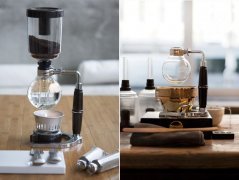
In 1840, a glass test tube in a laboratory triggered the invention of siphon coffee (Syphon). The British took the test tube used in Biya's chemical experiment as a model to create the first vacuum coffee pot. Two years later, Mrs. Bachang of France improved the kettle with a little spring in shape, and the familiar upper and lower convection siphon pot was born. Siphon coffee maker in France

The history and usage of siphon pot
In 1840, a glass test tube in a laboratory triggered the invention of the siphon coffee maker (Syphon). The British took the test tube used in Biya's chemical experiment as a model to create the first vacuum coffee pot. Two years later, Mrs. Bachang of France improved the kettle with a little spring in shape, and the familiar upper and lower convection siphon pot was born. Siphon coffee pot in France

History and usage of siphon pot siphon coffee
In 1840, a glass test tube in a laboratory triggered the invention of the siphon coffee maker (Syphon). The British took the test tube used in Biya's chemical experiment as a model to create the first vacuum coffee pot. Two years later, Mrs. Bachang of France improved the kettle with a little spring in shape, and the familiar upper and lower convection siphon pot was born. Siphon coffee pot in France

How does the coffee machine work? Various types of coffee machine use method detailed explanation
First of all, we want to introduce what is called brewing coffee. Boiling-Put something in water and boil it with a torch. But brewing coffee is the process of washing out the flavor of coffee with 92-96 degree water. Many people misunderstand this word. If you really put coffee in water and boil it, you will not get a cup of coffee, but a cup of drink.
Introduction to the history and usage of siphon kettle
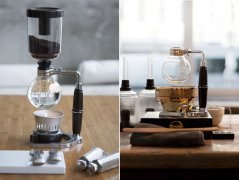
In 1840, a glass test tube in a laboratory triggered the invention of siphon coffee (Syphon). The British took the test tube used in Biya's chemical experiment as a model to create the first vacuum coffee pot. Two years later, Mrs. Bachang of France improved the kettle with a little spring in shape, and the familiar upper and lower convection siphon pot was born. Siphon coffee maker in France

The History and usage of siphon Pot General knowledge of Coffee Pot
In 1840, a glass test tube in a laboratory triggered the invention of siphon coffee (Syphon). The British took the test tube used in Biya's chemical experiment as a model to create the first vacuum coffee pot. Two years later, Mrs. Bachang of France improved the kettle with a little spring in shape, and the familiar upper and lower convection siphon pot was born. Siphon coffee maker in France

A detailed explanation of the history and usage of the siphon kettle
In 1840, a glass test tube in a laboratory triggered the invention of siphon coffee (Syphon). The British took the test tube used in Biya's chemical experiment as a model to create the first vacuum coffee pot. Two years later, Mrs. Bachang of France improved the kettle with a little spring in shape, and the familiar upper and lower convection siphon pot was born. Siphon coffee maker in France